Gorilla research in Musanze, Rwanda: Hillshades continued

I’ve been working on base cartography for the research area in Rwanda. Unlike here in Cleveland, we have some great topography to work with, so we can leverage that for basemaps. But, it’s such a beautiful landscape, I didn’t want to sell these hillshades short by doing a halfway job, so I’ve been diving deep. Background First, some legacy. I read three great blog posts … Continue reading Gorilla research in Musanze, Rwanda: Hillshades continued

On Generalization Blending for Shaded Relief

Originally posted on somethingaboutmaps:
I have nearly recovered sufficiently from an amazing NACIS conference, and I think I’m ready to get back to a little blogging. This time around, I’d like to present you all with an unfinished concept, and to ask you for your help in carrying it to completion. Specifically, I’d like to show you some attempts I’ve made at improving digital hillshades… Continue reading On Generalization Blending for Shaded Relief

Gorilla research in Musanze, Rwanda: Hillshades!

In previous posts here1, here2, and here3 discussed a then and future trip to Rwanda to help with GIS and gorilla research. No more in depth write up yet, but I’ve been working on some of the cartographic products to show in the background of maps. Since Rwanda is so beautifully hilly (read: mountainous) and the research is focused on the Virunga Mountains (volcanoes) themselves, … Continue reading Gorilla research in Musanze, Rwanda: Hillshades!

Gorilla research in Musanze, Rwanda

In previous posts here1 and here2, I discussed a (then future) trip to Rwanda to help with GIS and gorilla research. I cannot say enough good about the experience. The people of Rwanda are warm and welcoming, the research team at Karisoke (Dian Fossey Gorilla Fund International) hard working, brilliant, and fun. For now we’ll do some pictures to give flavor. Then I’ll build out … Continue reading Gorilla research in Musanze, Rwanda

Quantitative analysis of gorilla movement and R-Stat (part 2)

In my previous post, I did a bit of setup on the who and what for analyzing gorilla data. Now let’s move into R-Stat a little bit, specifically installation and configuration. For R, we’ll install whatever package is the correct one for your machine, and then also install R-Studio. This gives us a nice development environment for R. We’re going to leverage a few packages … Continue reading Quantitative analysis of gorilla movement and R-Stat (part 2)

Quantitative analysis of gorilla movement and R-Stat

At this point in my career, it is a rare request that intimidates me. Most requests are either solved, largely solved (and I know how to find the answer), or broadly improbably / excessively expensive. This is a nice place to be. I have a bit of calmness with every request, a vision for how to execute, or the escape valve of saying, “That’s harder … Continue reading Quantitative analysis of gorilla movement and R-Stat

Finding peace, finding ground: Drone flights for hydrologic modeling

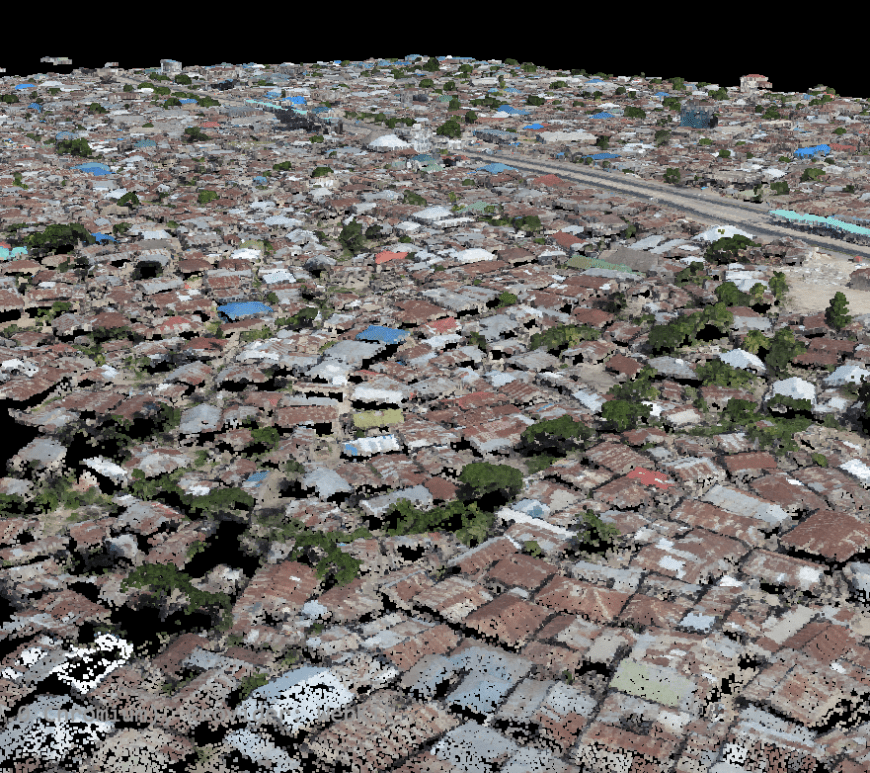
Another problem is the difficulty of turning photogrammetrically derived point clouds into Digital Terrain Models. There is proprietary software that does this well (e.g. LasTools and others), but we sought a free and open source alternative and approach. Let’s visualize the problem. Continue reading Finding peace, finding ground: Drone flights for hydrologic modeling

UAS Mapping: Positional Accuracy Assessment via GeoKota

Introduction Recently we partnered up with folks from the University of Akron to help determine how accurate UAS are compared to traditional mapping methods. Given the current difficulty to fly commercially in the National Airspace, this partnership gave us a unique opportunity to fly inside their Field House. This controlled space had a lot of […] via UAS Mapping: Positional Accuracy Assessment — GeoKota Continue reading UAS Mapping: Positional Accuracy Assessment via GeoKota