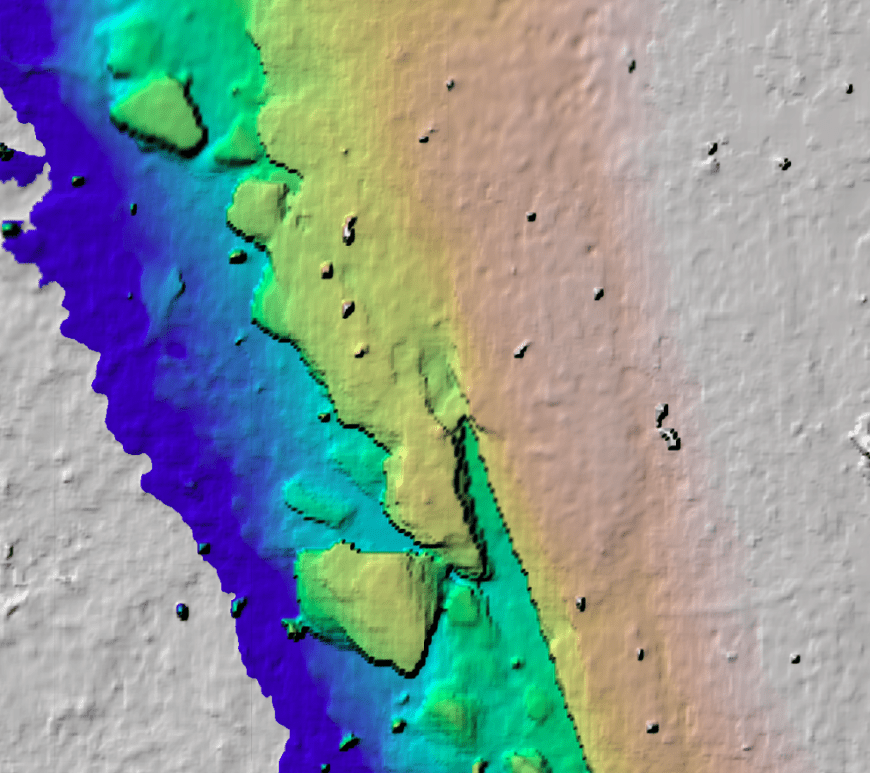
Reconstructing cliffs in OpenDroneMap, or how to beat LiDAR at its own game (part 2)

In the beginning In a previous blog post, we explored how we can quite effectively derive terrain models using drones over deciduous, winter scenes. We ran into some limitations in the quality of the terrain model: the challenge was removing the unwanted features (things like tree trunks) while retaining wanted features (large rock features). I concluded the post thusly: For our use case, however, we … Continue reading Reconstructing cliffs in OpenDroneMap, or how to beat LiDAR at its own game (part 2)

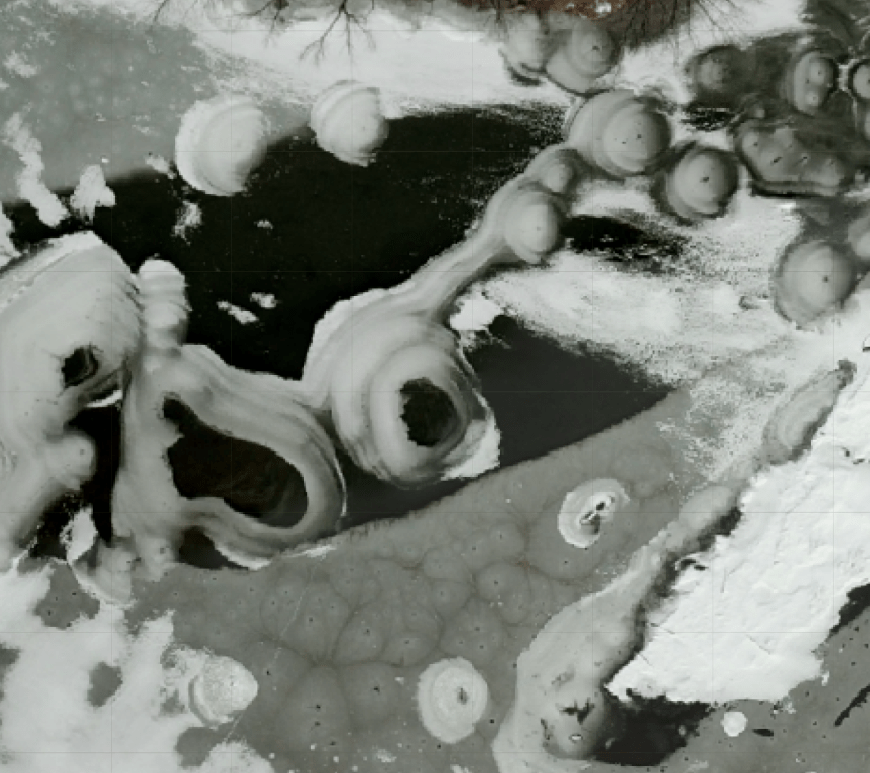
Mapping the ephemeral

One of my favorite aspects of drone mapping is, since it is 1) under our personal control 2) high resolution and 3) can collect data even when it’s cloudy, it’s possible to observe and document ephemeral phenomena that otherwise might not be captured by satellite or manned aircraft imagery. To that end we mapped lake ice yesterday. We have been flying a series of videos … Continue reading Mapping the ephemeral

Reconstructing cliffs in OpenDroneMap, or how to beat LiDAR at its own game

LiDAR and photogrammetric point clouds If we want to understand terrain, we have a pricey solution and an inexpensive solution. For a pricey and well-loved solution, LiDAR is the tool of choice. It is synoptic, active (and therefore usable day or night), increasingly affordable (but still quite expensive), and works around even thick and tall evergreen vegetation (check out Oregon’s LiDAR specifications as compared with … Continue reading Reconstructing cliffs in OpenDroneMap, or how to beat LiDAR at its own game

Reconstructing stream corridors in OpenDroneMap

In October of 2017, a few collegues and I walked down West Creek, in Parma, Ohio to do some prospective mapping of the stream corridor. The hope was this: that by taking a sequence of photos from within the stream, we could use photogrammetry to reconstruct the corridor and ultimately model water flow through the same corridor. Knowing the the reconstruction of this complex physical … Continue reading Reconstructing stream corridors in OpenDroneMap

Landscape Position using GDAL — PT 3

More landscape position pictures — just showing riparianess. See also https://smathermather.wordpress.com/2014/11/22/landscape-position-using-gdal/ and https://smathermather.wordpress.com/2014/11/24/landscape-position-using-gdal-pt-2/ Map tiles by Stamen Design, under CC BY 3.0. Data by OpenStreetMap, under ODbL Continue reading Landscape Position using GDAL — PT 3

Landscape Position using GDAL

Hat tip again to Seth Fitzsimmons. I’ve been looking for a good, easy to use smoothing algorithm for rasters. Preferably something so easy, I don’t even need to write a little python, and so efficient I can run it on 30GB+ datasets and have it complete before I get distracted again by the next shiny project (a few hours). Seth’s solution? Downsample to a low … Continue reading Landscape Position using GDAL

Proper (ab)use of a database, contour interpolation using #postgresql #postgis #arcgis

Anyone who has been following along at home knows I don’t think much like a DBA.  Sometimes that’s good; mostly it’s probably bad.  In this post, I hope it will be interesting. The problem of the day is how to take engineering contours derived from breaklines, a lidar point cloud, and all the lot, and do a good job interpolating that to a DEM.  This … Continue reading Proper (ab)use of a database, contour interpolation using #postgresql #postgis #arcgis

GDAL Slopes– Local Hydrologic Slope vs. the Standard Approach

Open Source software is not, of course just about warm and fuzzies, great support, rapid development cycles, shared costs, etc., it’s also about getting your hands dirty with someone else’s code and implementing stuff more quickly and more intelligently because of it, and hopefully learning something in the process.  You don’t have to poke under the hood to drive the car, but sometimes it’s nice … Continue reading GDAL Slopes– Local Hydrologic Slope vs. the Standard Approach

Landscape Position: Conclusion? (part 2)

From earlier post: “I’ve managed to pilot most of a fast high resolution landscape position workflow with PovRay as my magic tool. The final steps I hope to pipe through PostGIS Raster. In the meantime a screenshot and description: blues are riparian, raw ocre, etc upland categories, grey is mostly flat lake plain and mid slopes, all derived from just a high res DEM input … Continue reading Landscape Position: Conclusion? (part 2)